23.09.2025, insuedthueringen.de
Wolfgang Swietek
An exciting evening at the Themar Town Hall. The topic: a look into the history of Themar’s Jewish families at the end of World War II.


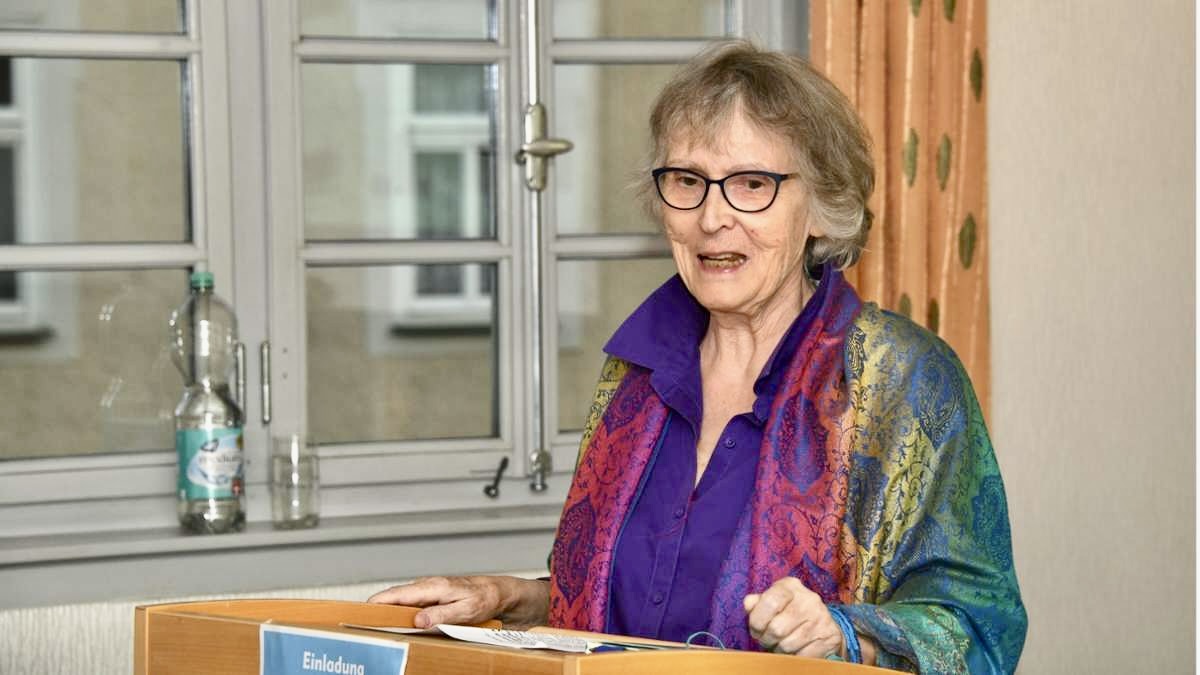


Even after 80 years, the fates that once befell this small Werra town have not been forgotten. Families who had lived here for several generations, enjoying excellent relations with their German fellow citizens, were ostracized at the onset of Nazi rule. They were discriminated against as Jews, persecuted, and deported to extermination camps, which meant certain death for many. Only a few managed to escape abroad; only a few were able to build a new life for themselves in Switzerland, England, or America.
For many years, the members of the ” Themar Meets Europe” association have strived to ensure that this – albeit inglorious – history of the town is not forgotten. Themar was also one of the first towns where Stolpersteine (stumbling stones) were laid in memory of its former Jewish citizens.
Doctor arrives from Canada
They received support in their research from Dr. Sharon Meen , who had already visited Themar several times. In 2013, she was awarded the title of Honorary Citizen for her research on the history of Themar’s Jewish citizens. She also made the long journey for the next meeting at the Themar Town Hall.
Many chapters have been written in the study of the history of Themar’s former Jewish citizens. The number of those forced to leave the town because of Nazi policies is estimated at around 205. They found a second home in Switzerland and Italy, in Palestine and Denmark, in England and the USA.
Family reunifications in Themar
Thanks to the initiative of Barbara Morgenroth, the former mayor of Themar Hubert Böse, Sabine Müller from the association “Themar meets Europe,” and other Themar residents, numerous events and initiatives have taken place. They have repeatedly contacted former Themar residents, once they found their addresses, and invited them to Themar. A curious aspect of this was that in some cases, family members or their descendants, who now live in many countries around the world and who had lost all contact with each other after their escape, have only met again here in Themar. One example of many is the Gassenheimer family. Further new insights were presented by Sharon Meen in an overview.
Poul Salomon Müller, who was born in Denmark in 1958 and still lives there today, told in detail the story of his father Julius Müller:
He was born in Themar on April 2, 1919, but had to leave the town because of his Jewish heritage. Not everyone in the family managed to escape; some ended up in one of the concentration camps and were murdered there. His father’s family lived on Bahnhofstrasse [and Meiningerstrasse] in Themar.
But Poul Salomon Müller knew how to tell a story that was not always dramatic. In a more conversational tone, he portrayed his father as a lovable man who, even if there was no beer all week, insisted on having a glass of beer every Sunday. As a small boy, he was once caught smoking. As punishment, he was forced to smoke a cigar at home. This cured him of his habit once and for all—he never turned to tobacco again. He later attended high school with the intention of becoming a doctor. But he was expelled from high school in 1933—the Interior Minister of Thuringia (incidentally, the first minister to be a member of the Nazi Party) did not tolerate Jews at the school. In any case, they were not allowed to attend religious education classes and had to spend these hours in the schoolyard.
Julius met decent Danes
Later, the Müller family was evicted from their home on Bahnhofstrasse in Themar. On November 4, 1942, Julius Müller was stripped of his German citizenship. While several of the family’s relatives were murdered in the Nazi death camps, Julius Müller managed to escape to Denmark. Fortunately, he met some decent Danes there, as his father later told Poul Salomon. “The people paid more for the work than they were actually allowed to; they were only allowed to provide food and drink for the German refugees. My father lived near a German military base at the time,” Poul continued. “The German soldiers knew about the escaped German (Jewish) family, but they turned a blind eye. Not all Germans were like that.” His father later even received Danish citizenship. Poul Salomon Müller received applause when he happily announced: “This year I have been naturalized as a German citizen again!”
Sharon Meen had one more message at the end of the evening: On March 5th of next year, at 9 a.m., more stumbling blocks will be laid in memory of former Jewish citizens of Themar. This is made possible—as with the more than 60 stumbling blocks already laid—primarily through donations.
