The following text was prepared by the team at Zeit-Geschichte(n) e.V. in Halle/Saale upon the laying of Stolpersteine for Hans Ney on 06 March 2026.
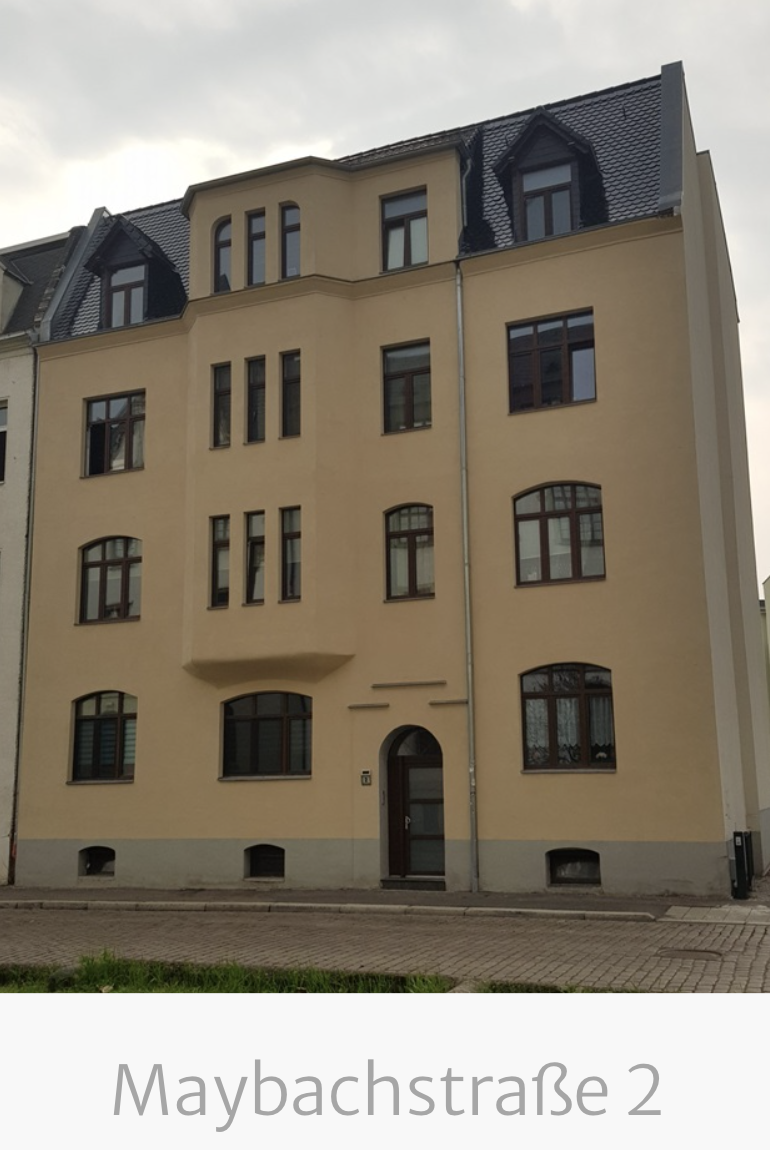
Elise Ney, née Gassenheimer, and her son Hans Ney lived at Maybachstraße 2.
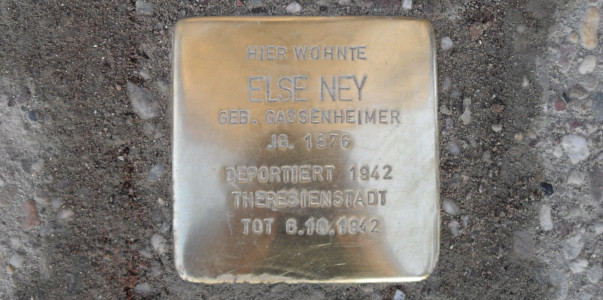
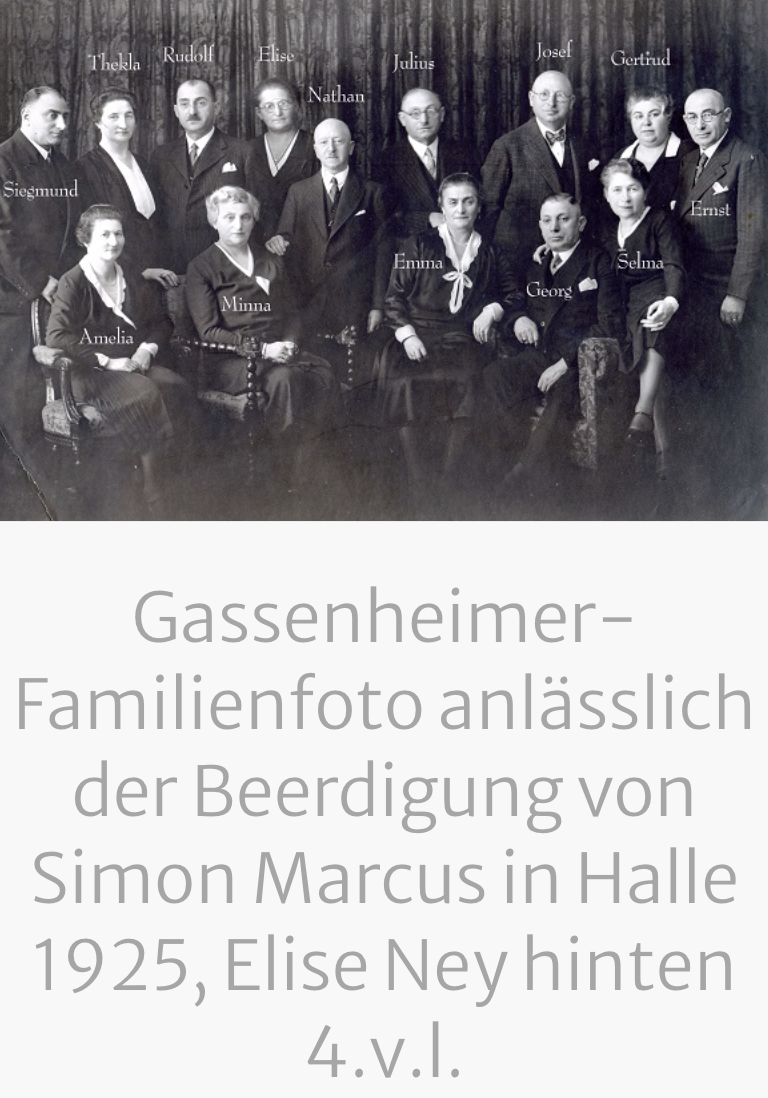
Elise Ney (born June 10, 1876) came from Themar in Thuringia, where her family ran a large company, “Joseph Gassenheimer & Sons,” that manufactured agricultural machinery and had several branches throughout eastern Germany. Some of her siblings had settled in Halle starting in 1903. Elise also moved to Halle and lived there with sister Minna Frankenberg’s family at Prinzenstraße 12.
In 1913, Elise Gassenheimer married Max Mosche Ney (born February 18, 1863 in Halberstadt), a leather merchant who was also Jewish, and moved to Halberstadt to be with him. Their son Hans was born there on December 12, 1913.
Elise and Max Ney’s marriage ended in divorce in 1915. Elise Ney then returned to Halle with her son Hans. Three of her siblings were already living there: Georg Gassenheimer with his wife Selma (née Schwab) and daughter Ruth; Minna Frankenberg (née Gassenheimer) with her husband Nathan and son Siegfried; and Emma Marcus with her husband Simon and three sons. Initially, Elise Ney lived with Hans at Reilstraße 16, and then moved to Maybachstraße 2. She earned her living through commercial work for her brother Georg Gassenheimer’s company.
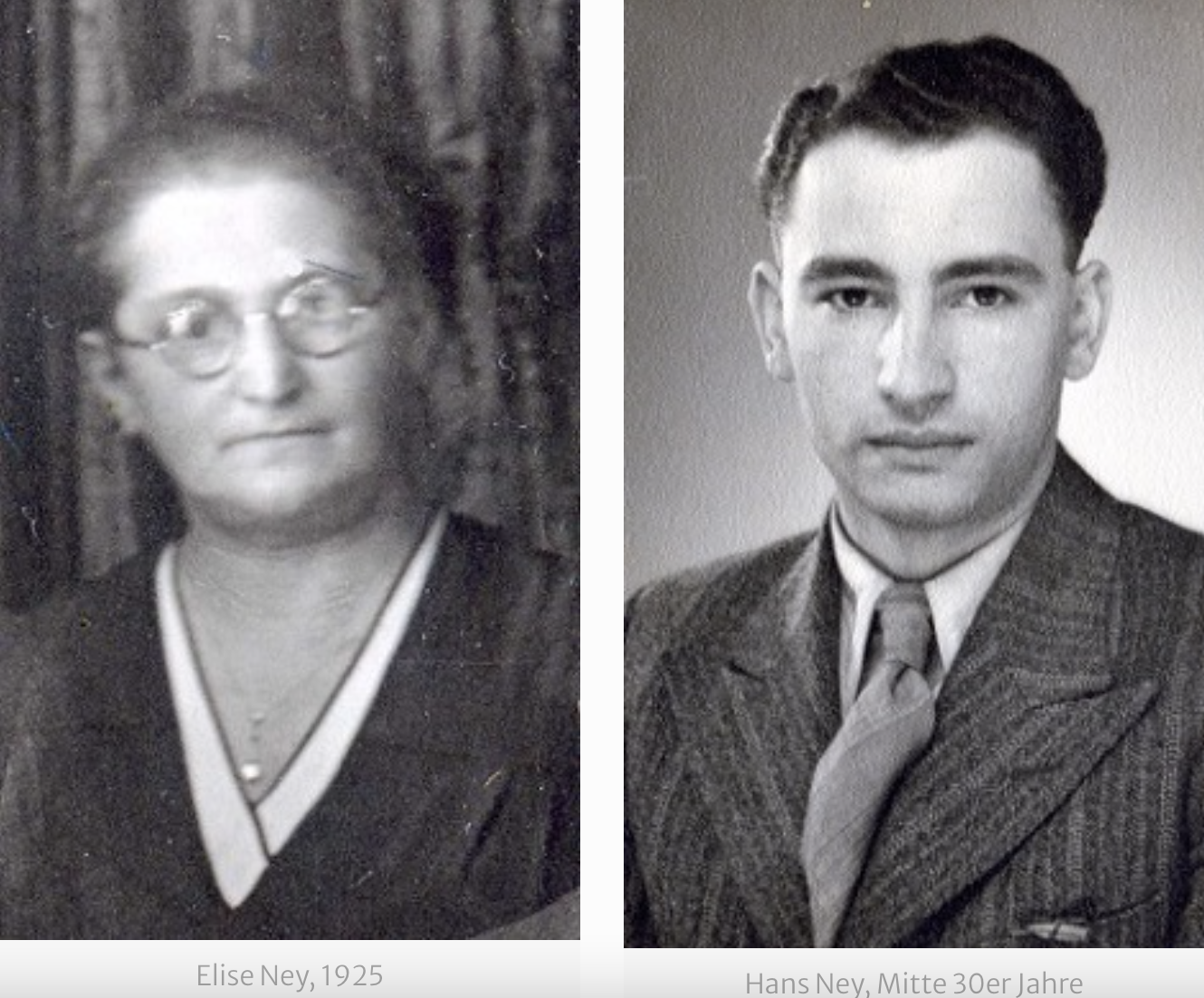
In April 1938, 24-year-old Hans Ney was arrested by the criminal police in Halle as part of the “Work-Shy Reich” campaign.
During this “campaign” between April and June 1938, over 10,000 people, almost exclusively men, were deported to concentration camps. Hans Ney was taken to Buchenwald concentration camp on April 25, where he was forced to perform slave labor. He was given prisoner number 89. His occupation was listed as “driver” on a card from the concentration camp.
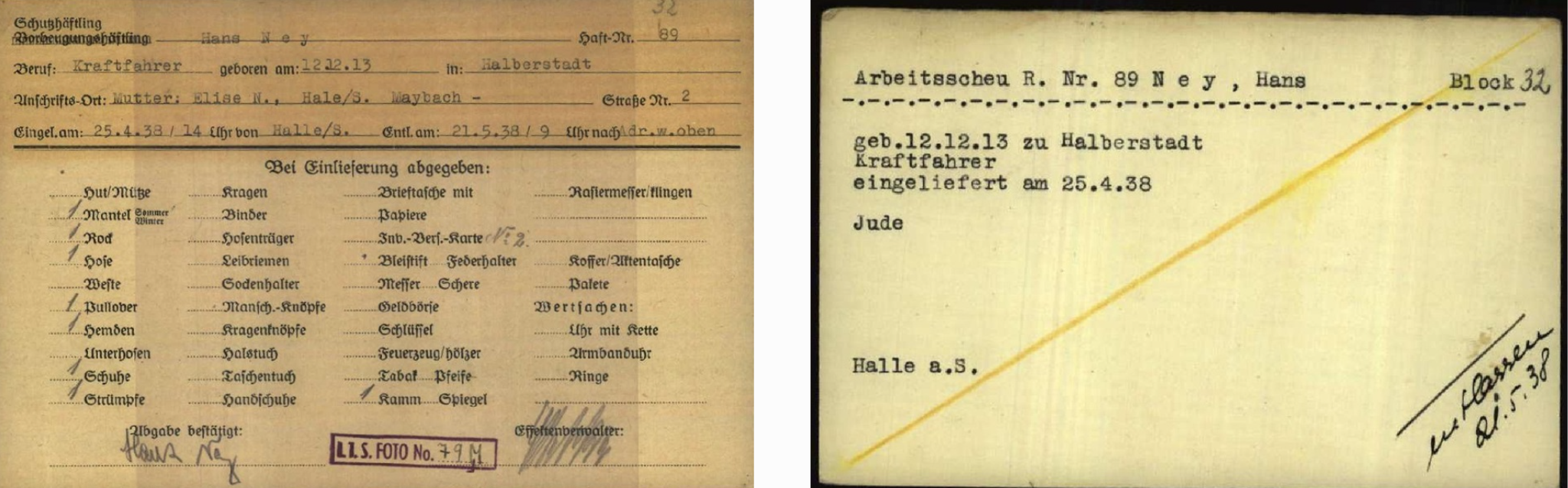
On May 21, 1938, barely a month after his arrival at the concentration camp, Hans Ney was released to live with his mother in Halle. He then tried to leave Germany, which was no longer easy at that time. Probably for this purpose, he received financial support from the Jewish community of Halle for six months. The money was likely intended to enable Hans Ney to pursue vocational training which would increase his chances of emigration, as some countries only accepted people with skills needed there. With this in mind, Hans Ney first went to Berlin; then, in June 1939 he moved to Munich, where the State Association of Jewish Communities had established a “training center for Jewish youth as craftsmen.” Adults wishing to emigrate could also be trained there in either welding or furniture making. Hans Ney completed his welding training and initially lived in a Jewish apprentice dormitory, and from October 1940 onward in a Jewish hospital.
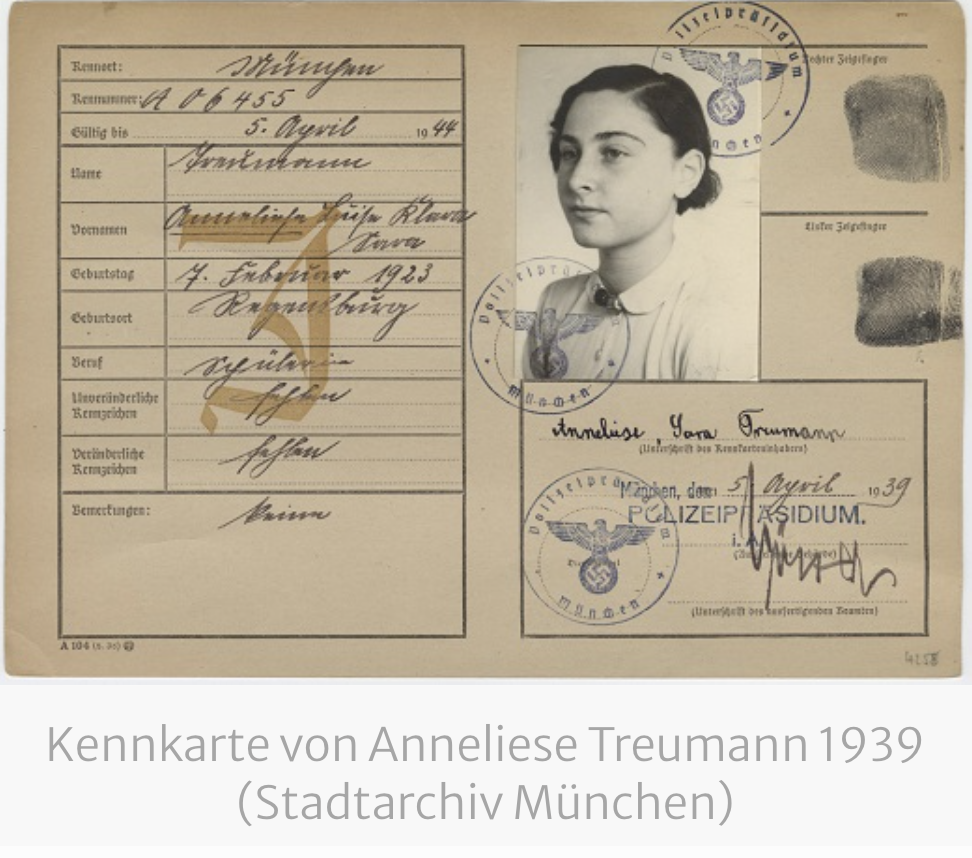
Dieter Marcus, a cousin of Hans Ney, remembers how Ney visited his family in Halle and showed them his welding equipment. Hans Ney also spoke of his girlfriend Anneliese from Munich. Anneliese Treumann (born February 7, 1923, in Regensburg) had lived with her grandmother since her mother’s death in 1937. Like Hans Ney, Anneliese Treumann was preparing for emigration to Palestine through vocational training. However, this never happened. From 1941 onward, she was forced to work at the Lohhof flax-processing plant, (1) just outside Munich. Her grandmother wrote about Anneliese: “She leaves the house at 5:30 in the morning and returns at 6:30 in the evening, bringing food for the whole day; she has to work outdoors.” Later, Anneliese had to sleep on the factory grounds of the flax retting plant and was only allowed to travel to Munich occasionally on weekends. There, she would always meet Hans Ney, who would greet her at the train station.
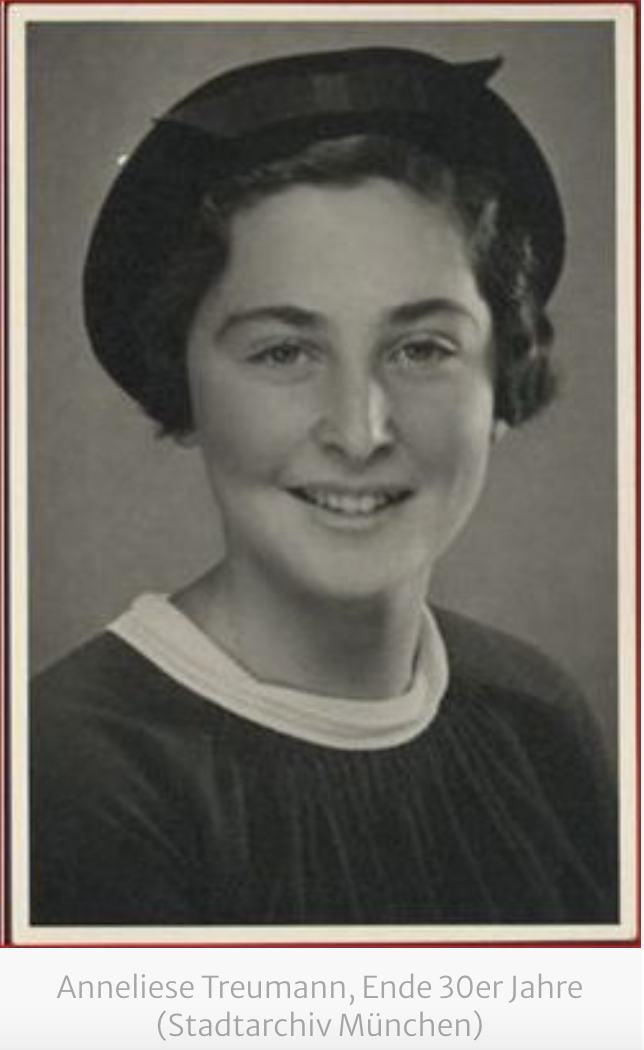
In March 1942, Hans Ney and Anneliese Treumann received their deportation notices. In the early morning hours of April 4, 1942, the transport departed with a total of 987 people. Two days later, on April 6, it reached its destination: the Piaski Ghetto near Lublin. From there, the deportees were distributed among various ghettos in the surrounding area; some remained in Piaski.
Anneliese Treumann’s grandmother, Lina Binswanger, received four postcards from Piaski: In one, Anneliese announced that she and Hans intended to marry. Two postcards were from Hans: In the first, he reported that Anneliese had been assigned to forced labor in the swamps; in the second, he wrote that he had received no further word from Anneliese. This was the last sign of life from 29-year-old Hans Ney. After that, all trace of him was lost.
The fourth postcard, dated September 7, 1942, was from a friend of Anneliese’s, in which she reported having received news of her. After that, Anneliese Treumann’s trail also goes cold. She was 19 years old at the time.
It is likely that Hans Ney and Anneliese Treumann died either due to the appalling living conditions in the ghettos or were murdered in one of the nearby extermination camps of Belzec, Sobibor, and Treblinka—camps of “Operation Reinhardt.” In “Operation Reinhardt,” the Nazis murdered at least 1.6 million Jews and Roma between March 1942 and October 1943. It was outwardly presented as a reaction to the assassination of Reinhard Heydrich, SS-Obergruppenführer and Nazi police general from Halle.
Elise Ney, presumably after her son left Halle, moved back in with her sister and brother-in-law—Minna and Nathan Frankenberg—at Kurfürstenstraße 74. However, when the Nazi racial laws of 1939 prohibited Jews and “Aryans” from living under the same roof, all three were forced to leave the apartment. From 1942 onward, Elise Ney, along with Minna and Nathan Frankenberg, was forced to move into the so-called “old people’s home” on the grounds of the Jewish cemetery at Boelckestraße 24 (now Dessauer Straße). In reality, Jews were crammed together there in extremely confined spaces before their planned deportation. On September 19, 1942, Elise Ney, along with her sister Minna Frankenberg and Minna’s husband, was deported to Theresienstadt.
Elise Ney died shortly after her arrival at the Theresienstadt concentration camp on October 6, 1942, at the age of 66.
Her brother-in-law Nathan Frankenberg and her ex-husband Max Ney also died in Theresienstadt. Her sister Minna Frankenberg survived and returned to Halle after the camp’s liberation.
Sources and further information:
Halle (Saale) City Archives, especially the Gudrun Goeseke Papers
German Federal Archives
Arolsen Archives
Yad Vashem
Centrum Judaicum Berlin
Volkhard Winkelmann and the former student project “Jews in Halle” of the Südstadt-Gymnasium Halle (eds.): Our Memorial Book for the Victims of the Holocaust in Halle. 3rd edition (2008)
Entry on Hans Ney
Entry on Elise Ney
Descendants of the Gassenheimer family, especially Dieter Marcus. For much more information on the history of the Gassenheimer family, see https://judeninthemar.org/de/die-familie-samuel-und-lotte-geb-stein-gassenheimer/, a project by the Canadian researcher Sharon Meen.
The Biographical Memorial Book of Munich Jews 1933-1945
Entry on Hans Ney
Memorial Marker, City of Munich
Entry on Anneliese Treumann
Unterschleißheim Forum, Nazi Forced Labor at the Lohhof Flax Retting Plant
Entry on Annemarie Treumann
On the deportation from Munich to Piaski on April 4, 1942: https://gedenkbuch.muenchen.de/index.php?id=piaski
Life at Boelckestraße 24 – In the Footsteps of Isidor and Frieda Hirsch
A film by Inga Dauter, Doreen Hoyer, and Elisabeth Schinner (2014, 13 min)
Produced as part of the project “Stolpersteine – Films Against Forgetting” of the Master’s program in Multimedia & Authorship at Martin Luther University Halle-Wittenberg, 2014